Tag: Time Heal My Heart

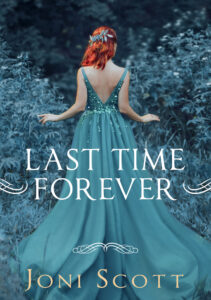
Joni’s Scott’s Last Time Forever

Joni’s Scott’s Last Time Forever

Joni Scott’s Last Time Forever is the third and last novel in her ‘Time’ series of historical novels. It is a standalone novel and Joni’s fifth. Readers can first enjoy the prequel novel, Time Heal my Heart and its prequel, Whispers through Time. All three novels focus on a true story set in the first half of the Twentieth century. Joni sprinkled a true story with the magic dust of fiction and included some exciting subplots and characters. Tellwell Canada proudly publishes this book for the Australian author. Here is the link to the paperback print version of Last Time Forever. on Amazon. The print and e book format are also available on many other popular platforms.

What is Last Time Forever about?

The Great War is over, and the world celebrates. It is 1920. Childless young couple, Francesca and Sebastian leave Sydney, Australia for a second honeymoon in Europe. Paris is abuzz with writers and artists. They fall in love with the city and each other all over again.

But at the abbey of Mont-Saint-Michel in Normandy, the mood is very different. War has left its mark, and the orphanage shelters the tiny victims of its chaos. However, when Francesca and Sebastian meet little Pepe, the sun seems to shine again. They become family and travel on with Pepe to Spain to reunite with Sebastian’s parents. It is a summer to remember, the first they share together as a family.

The Sydney Harbour Bridge Construction

The focus of last Time forever shifts to the disruption and excitement in Sydney as the Harbour Bridge starts to extend across the beautiful harbour. From their vantage point of the North Shore, Francesca and Winnie’s families watch its progress. Winnie’s husband, Walter, is one of the fortunate men to get a job on the construction. He feels doubly fortunate once The Great Depression of the 1930s descends on the city. Life is hard and beggars and the homeless roam the streets. The bridge construction stands as a beacon of hope through these dark times. It is a symbol of hope. It will unite the city.

Sisters, Francesca and Winnie are main characters

Francesca and Winnie are sisters newly emigrated from London. The story focuses on their lives. Circumstances threaten their once close relationship. As Winnie has child after child, Francesca worries for a sister who does not have the same spirit she had before the war took its toll on her. Does Winnie have melancholia as Sebastian her doctor husband suspects?

Francesca, the younger sister is the narrator. As an older woman she starts her story in 1920’s just after World War One.

An intriguing French subplot in Last Time Forever

Francesca’s concern shifts to France and her French friend Lisbette. The shadow of war in Europe threatens to become world-wide. Hadn’t the Great War been enough to end all wars?

While the war rages in Europe and another threatens the Pacific, Lisbette becomes involved in the Resistance. Francesca has no idea of her friend’s secretive work.  It is a very dangerous time for the people of France.

The story centres on true events and is a family saga novel.

coverdraft-LastTimeForever-final Joni Scott is an Australian writer with four published novels. Last Time Forever is her fifth novel and third historical fiction based on true lives. Writing is a hobby she discovered while trying to make sense of her family history. Joni has her own website where she writes history and writing blog posts. joniscottauthor.com


Sisters as Rivals

Sisters as Rivals

Sisters as rivals explores the relationship of sisters. Recently, I have posted about the Romanov grand duchesses. This proved to be a very popular post, so I thought to expand on the subject of sisters. The Romanov sisters were also royalty and suffered a terrible fate because of their status. Read about these beautiful young grand duchesses in my recent posts on the Russian royal family and these tragic sisters. They seemed to get along well but Anastasia the youngest may have been a bit of a brat. She was the naughtiest of the mostly very well behaved and family orientated sisters.

Writing sisters 

The arts abounds with famous sisters as rivals. The Bronte sisters, Anne, Charlotte and Emily shared a love of writing. maybe they shared a sense of rivalry as to who could write the best story? I know it was Agatha Christie’s big sister Madge who challenged Agatha to write a crime novel. She did well, didn’t she. Writing over 80 novels and stories as well as plays, Agatha Christie became the most read and published novelist of all time.

I love the fictional sisters of Little Women and how they mostly got along just fine for four girls with different temperaments. There are hints at jealousy and competitiveness but nothing too savage happens, maybe because it is fiction. But not all sisters have happy relationships. No one can be more annoying than a little sister trying to take the limelight or steal your boyfriend. Jealousy is a big issue that often ignites a lifetime of rivalry.

Movie Star sisters as rivals

In the case of movie star sisters, Joan Fontaine and Olivia de Havilland, the enmity was fierce. They competed at star level and never softened their fierce jealousy of each other.

The Olsen twins, Mary Kate and Ashley made their acting debut while babies. They share an even more special sister bond, that of twins. Venus and Serena Williams are sisters at a unique competitive level, that of gold medals. They mostly leave their rivalry on the courts. Then there’s the Kardashian sisters competing for the best curves.

Have you heard of Zsa Zsa  and Eva Gabor? They were two sisters out of a trio of Hungarian born sisters. Magda is lesser known though she married actor, George Sanders, her little sister’s cast-off husband. Zsa Zsa, the middle sister competed with Eva for men, money and beauty. Though the sisters married multiple times, Zsa Zsa was the only one to have a child. The Gabor sister act was an act to follow in the 1940’s and 50’s. They were always in the news, a bit like the Kardashians of today.

In the 1930s, The Andrews Sisters, Patty, Maxene and Laverne were another sister trio, a singing group famous for ‘Boogie Woogie Bugle Boy’ and other swing hits during WWII. They rated as the best-selling of all female vocal groups. Despite singing beautifully together and selling 75 million records, they started a fight in 1937 though they stayed as an act until 1967 when Laverne died.

Birth order and rivalry of sisters

Birth order does seem to have an effect on how sisters get along. The order of birth also is said to determine the personality of a child. First born children are usually more sensible, calm and conservative compared to their younger sisters. This is because their parents often spend more time on the discipline side of parenting. Later children meet laxer parenting as the parents run out of puff with a larger brood to control. Little sisters often get to do things their older sisters could not at the same age. this explains the claim that little sisters are spoilt.

As a a younger sister, I can see this. My sister claims I was spoilt and she had a tougher time. However, I have always looked up to her and listened to her advice. I even wrote her into my first book as a character! Whispers Through Time also tells the story of two sisters, my grandmother and great aunt who emigrated to Australia in 1912. They had a special bond through life though their lives took different directions. One married an itinerant worker and the other a rich doctor, but they stayed connected through their shared ordeals during World War One and Two.

Novels about sisters

In the third book in this series, Last Time Forever, a sense of rivalry that must always have been there, rises to the fore. The sisters have a falling out later in life. Watch out for this last book in the sister trilogy. It’s at the publishers now. But meanwhile if you like stories of sisters and historical fiction, read the others, Whispers through Time and Time, heal my Heart. 

Joni Scott is an Australian author with four published novels: Whispers through TimeThe Last Hotel,  Colour Comes to Tangles and her latest historical WWI drama, Time Heal my Heart. Joni has her own website; https://joniscottauthor.com.

Philoxenia and the kindness of strangers.

Philoxenia and the kindness of strangers.

Whilst at a book signing recently I experienced Philoxenia and the kindness of strangers. A customer browsing books nearby approached me with a book in hand. Unexpectedly, he asked what the title Philoxenia, a seat at my table. meant. Maybe he thought seeing as I was an author, I would know the meaning of the obviously foreign word in the title.

I eyed the attractive cover which featured a bowl of olives and a plate of rustic bread.”It looks like it is a Greek cookbook,” I commented. This was confirmed by the nature of the author’s names, Kon and Sia Karapanagiotidis. Delightfully long Greek names. The man smiled but still hovered. I had not answered his question. What does the word Philoxenia mean?

What does philoxenia mean?

I looked at the word again and recognised within it two smaller Greek words. They are ‘philos’ meaning friend and ‘xenos’ meaning stranger. “I think it means ‘the love of strangers'” I said, “but as it is obviously a cookbook, not sure if I am right.”

“I will google it,” he offered. Why he didn’t do this in the first place, I did wonder. Maybe he just wanted company or a chat with a ‘xenos’, a stranger like me. Or was I starting to look like a Miss Marple in my autumn years? No, that can’t be it, surely not, he is too young to be an Agatha Christie fan like me.

“It means hospitality or kindness to strangers,” he announced, flashing his phone towards me. “Ah!” I replied, “That makes sense. What a lovely word with a special meaning. We have both learnt something today. Thank you!” The stranger now a little less of a stranger, smiled. he had a lovely smile that further brightened my morning. Smiles are like that, aren’t they. So much better than frowns or blank stares! You feel less invisible.

Becoming more visible thanks to philoxenia

At book events, even though you are meant to be increasing your visibility as an author, you can feel very invisible. Folk wander by immersed in their own world, fair enough, I guess. But I always smile and say ‘good morning’ but many just give me a blank stare or grunt in return. Not practising philoxenia obviously. My new word.

The stranger stayed. His name was Brad. We chatted about food which made me a tad hungry as I had rushed to get here and not had breakfast. Then we chatted about travels another wonderful engaging topic. He like me had travelled widely and now we had our word, we extolled on the hospitality or philoxenia we had both experienced abroad. We had both been adopted for meals by Greek and Italian families we had randomly met. Yes, these lovely Europeans like to share their wonderful earthy cuisines with strangers. Meals made from the most basic of ingredients, fresh from the market and transformed into luscious comforting and delicious dishes for all to share. I remembered that I had included a chapter about this phenomenon in my latest book, Time Heal my Heart. 

Philoxenia and the English man

In Chapter 27, I think it is, the characters Oscar and Luigi retire from the exhausting Giro d’Italia bike race of 1914 (the most difficult race ever) They visit Luigi’s uncle and aunt in nearby Florence. There in the courtyard garden, they are plied with plates of steaming spaghetti to reinvigorate their stiff aching limbs. There in the garden, Oscar the Englishman marvels at the ‘philoxenia’ of Luigi’s family. Estranged from his own family in London, he has been a runaway for years and not even informed his parents where he is. How different is this happy, loving family sharing a splendid meal under a splendid tree in beautiful Florence.

Oscar will remember his sojourn in Florence for years to come. His time there with this family and their philoxenia prefaces the horror of the years to come. Even though Oscar and Luigi have no idea at this time, the world is about to erupt into war. In a few weeks’ time as they travel to Sarajevo, they will coincide with its outbreak, the opening shots fired by Gavrilo Princip that will echo around the world.

How a sandwich led to the outbreak of WWI

And this is another foodie story because Gavrilo would not have shot Franz Ferdinand and his wife Sophie if he hadn’t stopped for a sandwich at Moritz Schiller’s delicatessen! Now that’s a story in itself. See above link to Gavrilo Princip to read about this amazing coincidence that changed the lives of millions. I could not resist having my boys Oscar and Luigi also eating a salami sandwich nearby. A sort of Forest Gump moment. They become firsthand witnesses of the shot that lights the powder keg and boom! we have a world war. The first one ever. They called it The Great War. But it was not so great if you became embroiled in it as millions worldwide did. Oscar escapes the rising tensions by taking off to Argentina, but Luigi stays and takes the confusing consequences of his country changes sides during the war.

Philoxenia and the kindness of strangers rules the day!

Now I have come a long way off topic and away from my chance meeting in the bookshop. What happened, you might ask if you made it this far? (having survived my digressions and rants) Well done you. My stranger now not a stranger stayed to chat as I said and this led, I believe to other people thinking I was worth talking to and maybe not so invisible, so a few people hovered. They picked up and turned over my books to read the blurb on the back cover. Two wondered off to the counter with copies of The Last Hotel, my bestseller. Not everyone wants a signature and mine is not flash since I have CRPS in my right hand.

Thanks to the kindness of a stranger and later a few more strangers who stopped by, I had a lovely afternoon in Rosetta’s Bookshop, Maleny in the lovely hinterland of Queensland, Australia where I live. If you are ever here in our great southern land make sure to visit the Sunshine Coast Hinterland where you can view from a distance The (stunning) Glasshouse Mountains to the south. In Maleny and nearby Montville you can experience the hospitality or philoxenia of Queenslanders! There are many cafes, cheeseries and wineries where you can share a bowl of olives and some rustic bread just like the Greeks do.

Joni Scott is an Australian writer. See website joniscottauthor.com to read her history blog and find her books.

Agatha Christie, Queen of mysteries.

Agatha Christie, Queen of mysteries.

She is the queen of mysteries, the best-selling novelist of all times and one of the most prolific writers with 66 detective novels and 14 short story anthologies to her name. She wrote the longest running play, The Mousetrap which has played in London since 1952 and my mystery guest also wrote under the pen name Mary Westmacott. Did you pick up on the clues? Who is she?

The Queen of Mysteries

Yes, She’s Agatha Christie, the world famous, most celebrated detective-story writer. Agatha, the queen of mysteries and I have been one of her fans since a teenager. My daughter as a young teen also became a fan. Together, we collected 75 of her novels from markets and bookstores. We subscribed to the Poirot DVD collection and magazines and watched all the film versions of her books. Films based on her books are still popular and now with her copyright expired her work is used even more, some say exploited.

I am a self-confessed Agatha tragic (as well as a Titanic tragic.) What I love about Agatha, apart from her delicious mysteries, is the woman herself. Having read everything about her and her autobiography countless times, I can tell you that she was a very humble, natural, unpretentious person, unaffected by her world-wide fame.

Agatha Christie, a Natural Writer

When asked about her writing space and tools of the trade, Agatha laughed. ‘Why, I just need a little table somewhere, some paper, my old, battered typewriter and off I go.’ Apparently, her stories with their twists and turns, sprinkle of clues and trail of red herrings are already there in her head, bursting to come out and be put on paper. She’s a natural. No writer’s block, no hesitancy, two or three books a year, no worries.


Agatha Christie, a Famous yet Humble woman

At the premiere of the film based on one of her books, she asked why there was such a crowd. ‘It’s for you, Ma’am.’

‘No, it couldn’t be,’ she protested. Agatha snuck away into the crowd and queued up with the patrons. When asked about her absent ticket, she told the usher she was the writer, could she go in free? Disbelieving her, he barred her entry and called the manager. They were amazed to discover that this plain little lady was the great queen of mystery herself.

Indeed, as Agatha aged, she resembled anyone’s granny. By then, married to Sir Max Mallowan, the archaeologist, she travelled the world to his digs in Mesopotamia, now part of modern Iraq. She was an adventurous, no-frills woman, not one for glamour or the bright lights, nor interested in her fame. She wrote because she loved writing and puzzles. How good is that.

Agatha Christie and the Modern Reader

Some modern readers admittedly may find her stories xenophobic but that is how the world was in the 1920’s up until 1976, the year of her death. She was a woman of her time, reflecting its attitudes and values, like we all are. In post-war England, people were wary of the influx of refugees flocking into their country.

Yet despite her now cringe-worthy comments about foreigners, she made one of them her most loved character, Hercule Poirot, the little dapper Belgian refugee detective. In fact, Agatha was a champion for the marginalized. Both Poirot and Miss Marple existed at the margins of society. A rotund foreigner and an elderly spinster were not on the A lists of society.

But Poirot and Marple infiltrate society and meet some well to do folk. Unsuspectedly, quietly working their little grey cells, they outsmart the police constables, even Scotland Yard. It’s a victory for the small man, the foreigner and the little old lady. In Agatha’s world there would have been many spinsters and maiden aunts. The Great War and later World War II took the flower of British manhood leaving many girls unable to marry. Jane Marple hints at a long-lost love lost in the war as does Poirot. He too, has a past. He too has a heart.

Agatha and Beatrix Potter

Agatha Miller was born in Torquay in 1890 to older, well-off parents. Like Beatrix Potter, she was home schooled in her nursery and had lots of pets running about in a rambling house and garden. Agatha had imaginary friends called the kittens that she talked to and wrote stories about. It was her sister Madge that challenged her to write a novel, as she was dabbling in writing herself. But this older sister lost interest in books and found men and left home to marry. Agatha as an only child for years, occupied herself. She had a vivid imagination, again like Beatrix Potter.

Eventually Agatha who was a very pretty, blonde child grew into an attractive, slim young woman. She went to local dances and caught the eye of Archie Christie a dashing young fellow. They became engaged in the gathering clouds of World War One, hesitated a few times, but eventually married on Christmas Eve 1914. He served his country in The Great War and luckily survived.

Dark Days for Agatha 

During the dark years of the war, Agatha volunteered as a nurse and worked in the hospital dispensary. Here, she learnt about poisons and had the idea for her first detective novel, The Mysterious Affair at Styles where the victim succumbs to poison. It was the beginning of a seemingly never-ending flow of writing for young Agatha. I could not resist inserting Agatha in my latest WWI novel, Time, Heal my Heart. She becomes the friend of my character Dorothy who works in the dispensary with her. They have a marvellous time making suppositories and mixing potions. Agatha and her writing delights Dorothy my character.

Agatha Christie rejected by publishers!

Agatha’s first attempt at writing pre-dated the success of The Mysterious Affair at Styles. Agatha wrote a novel called Snow Upon the Desert. Six publishers rejected it. Today, the novel is still unpublished though it exists as a manuscript in the archives of her estate.

Agatha kept writing despite this rejection (as we all should.) She kept trying even after becoming a mother to a daughter, Rosalind, her only child. Agatha and husband, Archie were happy enough until her mother died. Agatha went into deep mourning and took herself off to her childhood home for weeks, while she sorted through the old house and grieved for her mother, probably her lost childhood as well.

It was during this time, 1926, that Archie had an affair with his secretary and decided he didn’t love his wife anymore. He told a startled Agatha that their marriage was over. Still mourning her mother, she now had to mourn her marriage as well.

It was a dark time for the writer. She disappeared for ten days, and no one could find her. Police found her car in a quarry. Unwittingly, she created a real-life mystery with herself in the star role. Strangely, ten days later a guest at a small hotel in Harrogate informed police that a woman resembling Agatha was staying there. There they found her registered under the name of Archie’s mistress. This is one episode of her life that Agatha passes over in her autobiography. She must have wanted to mentally erase the traumatic incident.

Agatha Sets Off for Adventure

Afterwards, divorce papers filed, she left her daughter in care and took off further afield. She went to Paris and boarded the train to Istanbul, then onto Mesopotamia. The train was The Orient Express. At the end of her second journey to these parts she met, by chance through friends, her next husband, the archaeologist, Sir Max Mallowan. Though he was 13 years younger, they hit it off. Agatha was most interested in his work (and men love that.) He was unaware of her writing, and knowing her, she probably dismissed it as a little hobby of hers, despite the fact that she was earning well from her books by then.

Agatha supports herself with her writing

In fact, even her first novel sold well. Not many debut authors can claim that success! During the 1920s and her stress over a failed marriage, she turned to thrillers, James Bond style stories with dark villains and political intriguing plots. The public did not like these novels, The Big Four and The Secret Adversary. They much preferred her classic detective stories. The 1920s was the time of the Flappers  so it was a new era. Agatha continued to do her own thing too and experimented with her craft. Eventually she realised detective stories were her strength.

It was good she had an income to fall back on after her marriage failed. Many women of that time had no chance if their man left them. She forged on and became the queen of mysteries. I wonder what Archie felt about his name becoming so famous because of his ex-wife’s talent not his own.

Agatha had not quite realized her literary strengths and was no doubt experimenting with other genres. Her few later attempts at thrillers in the 1950’s, The Pale Horse, 1961 and N or M, 1941 also did not attract admiration as much as her stock in trade ‘who dunnits.’  Her six novels under the pen name Mary Westmacott also offer a different style. They are partly autobiographical and sweet love stories. Agatha wrote a number of plays as well and ten short story collections.

Agatha and the Cosy Mystery

Finally, thankfully, she settled into the cosy mystery genre set in the ubiquitous English village with the inevitable vicar and cast of landed gentry and their servants. She later interspersed these with murder stories set in Mesopotamia, Murder in Mesopotamia,1936, in Egypt, Death on the Nile,1937, in Europe, Murder on the Orient Express, 1934 and The Mystery of the Blue Train,1928, and South Africa, The Man in the Brown Suit, 1924.

Agatha’s one regret was creating Hercule Poirot as past middle-aged. She didn’t anticipate that he would have to last many decades, along with the already aged Miss Marple. It constrained her to a time. She couldn’t use these characters in novels set too much later in the century. Eventually Poirot dies off in Curtain,1975, shortly before her own death.

Agatha borrowed from Arthur Conan Doyle to create a sidekick for Poirot in the form of Captain Hastings, just as Sherlock had in Watson. These sidekicks are not as smart and ask questions as the reader would mentally. It is a successful way of revealing how the detective is thinking as he chats with his curious sidekick. Captain Hastings and Poirot present a comic duo and add fun to the novels.

Agatha Christie is everywhere as the queen of mysteries

At any airport or train station anywhere in the world, you used to be able to spot someone reading an Agatha Christie novel, no matter their nationality. Maybe not so much now, as everyone has their nose in a phone, in what is called ‘Phubbing’. A combination of the word phone and snubbing!

Using my detective skills, I can spot an Agatha Christe novel at twenty paces, as I know all the titles! Even translated, they are mostly recognizable. Her most popular novel, at over a million sales, is And There Were None, 1939. This novel had an alternative name, Ten Little Niggers in USA, (possibly not anymore though.)

Agatha Christie in Film

Many of her novels make excellent films. Death on the Nile, Evil Under the Sun and Murder on the Orient Express are probably the most popular and revisited with modern re-makes. Over thirty films are based on her works. Agatha Christie novels are available in many languages o she has a world-wide market.

Recently, some writers have attempted to copy her work and write in her style, re-establishing the cosy mystery genre. This is encouraging! But they will never trump Agatha, the queen of mysteries.

Recognition for the Queen of Mysteries

Agatha was awarded many accolades for her services to literature and entertainment. She became a fellow of The Royal Society of Literature in 1950 and appointed a CBE in 1956. She was later promoted to Dame Commander of the British Empire in 1971, making her Dame Agatha Christie, three years after Max Mallowan was knighted. Therefore, she could also call herself Lady Mallowan, though I doubt she did.

In later years of their mostly happy marriage Max took a mistress who was also an archaeologist and friend. They married soon after Agatha’s death just as Archie married his secretary a week after he and Agatha divorced. Men behaving badly again.

Agatha hated crowds and was a shy, modest woman, despite her talents. She loved animals and gardens. Her last home, Greenaway in Dartmouth now resides with The National Trust. The world remembers Agatha Christie as an amazing woman who leaves a legacy of literature and film.


Photo Source: Unsplash

Joni Scott is an Australian author with four published novels: Whispers through Time, The Last Hotel, Colour comes to Tangles and her latest, Time Heal my Heart.  Joni has her own website; https://joniscottauthor.com.

The Great and Terrible War of 1914-1918

The Great and Terrible War of 1914-1918


The Great War started on 14 August 1914 in response to the assassination of Archduke Franz Ferdinand in Sarajevo, Serbia in the Balkans. Things had been brewing for some time in this part of the world. Once tensions reached a fever pitch, the fight was on. The Austro-Hungarian empire was a mighty one that included 14 countries many unknown in the popular domain. Ethnic diversities resented this take over and so there were many nationalist military groups fighting for independence. One such was The Black Hand.

The Black Hand and the Archduke

On hearing of the visit to Sarajevo by the heir apparent to the Austro-Hungarian Empire, The Black Hand planned his assassination. An activist threw a bomb under the car carrying the Archduke and his wife, Sophie. It missed the target injuring others in the motorcade instead. The Bosnian Serb, Gavrilo Princip was one of the nationalists involved and along with his disappointed comrades he fled the scene.

But Franz Ferdinand was meant to die that day it seems. The motorcade diverted to backstreets was in the act of turning around near a delicatessen where Princip was eating a sandwich. Surprised, he ran out and shot the Archduke and Sophie at short range. These two shots sealed the fate of millions. They ignited a powder keg that fanned the flames of The Great War.

The fuse that started The Great War.

At the time this conflict started it was not called World War One as not many expected a skirmish in faraway Serbia to become global. Also, no one expected the conflict to last long. But The Austro-Hungarians wanted to take revenge on troublesome Serbia and avert possible intervention by mighty Russia. During the following month post assassination, the powers in Europe took sides.

Taking sides

The Allies, also called The Triple Entente, included Britain, France, Russia. On the opposing side, the Axis included the Austro-Hungarians, Germany and Italy (though Italy switched sides in 1915). Other countries became involved by association. As these key players were Empires, they had inbuilt support from their colonies. Britain had Australia, Canada, other British colonies and surprisingly Japan. The Axis had Turkey on their side and later Bulgaria. I discovered there is a boardgame based on the conflict, called Axis and Allies. If only the leaders of empires had fought a duel or played this board game. Not used 40 million people as their play pieces.

From the outset, a lack of resources and fighting personnel disadvantaged the Central Powers or Axis. But it was their Teutonic pride and ambition that started the hostilities. Britain declared war in retaliation to the Axis advance into France.

Youthful enthusiasm for the war.

British soldiers and young civilian men were up for the fight. They looked upon it as a grand adventure, a way to serve their country and also see the world. No conscription needed they enlisted willingly and with much patriotic enthusiasm. After all they would be home by Christmas after eliminating the enemy. Wouldn’t they?

Gallipoli. It all went horribly wrong.

Similarly in the colonies, men signed up for the fight. A whole generation of men and boys who lied about their age. Some were only 14 years old. Young Australians and Canadians were eager to go to Europe and see the world. The pay for doing so was just icing on the cake. Whole contingents of these keen young men would be dead shortly after. The Gallipoli campaign alone took 70, 000 of the young Allied soldiers and Turkey lost 60,000 men. Stalemate was the name of this deadly game. It was all about a planned British sea route through the Bosphorus  to seize the straits of the Dardanelles in Turkey. But it all went horribly wrong.

Horribly wrong. The best made plans of Churchill misfired and bogged troops down in nine months of hell on both sides. The trench warfare in the fields of France and Belgium also mired men in stalemate with much sacrifice for nothing gained. Bogged down in mud, not advancing at all, this new type of warfare cost men their lives and sanity. Bunkering down in trenches was the only way though to escape machine gun fire.

Those who survived the onslaught were not the young men they were. Shell shock and other traumas took their toll. In 1914, A Christmas truce gave hope but then the authorities forced the soldiers to continue the pointless battle for territory. The penalty for refusal to resume fighting was execution.

The deadly weapons of The Great War

Never before had soldiers faced machine gun fire and coils of barbed wire. They were new weapons. Daylight fighting was pure suicide. Sending men over the top of the trenches into No man’s land was tantamount to murder yet in the early days that is what happened. Coils of barbed wire, designed to keep the enemy out, also ensnarled many a soldier trying to retreat to safety. It took a while for the commanders from their position of comfort and safety to realise the enormity and futility of the troop losses.

The theatre of The Great War

But the war waged on in the mud at the infamous Somme and Ypres battlefields. Germany pressed northeast in battle to Russia as well up to 1917 when Russia descended into its own civil revolution.  Trenches that were intended as temporary stages for war became the rat and lice infested homes of soldiers for years at a time. The theatre of war did not refresh its scenes. There was no advancement. Trenches filled with the dead and shattered. Families at home grieved their young sons and fathers.

There were stories of great bravery and cowardice. News abounded of flying aces of the air, spies like Mata Hari, intelligence and espionage from balloons aloft and messenger pigeons. These stories buoyed the spirits of all. Surely it would end soon, surely there would be peace.

The huge losses of The Great War

Once USA entered the fray it was all over. The Germans reluctantly admitted they were a spent force and outnumbered. Kaiser Wilhem abdicated, and an armistice signed on 11th November 1918. But this forced sudden end to the conflict left Germany feeling cheated of victory and this unfinished business sowed the seeds for another world war just twenty years later.

20 million lost their lives in this conflict. This includes the civilians caught up in the fight. With another 21 million wounded and 8 million left permanently disabled, it was a grim toll. This statistic does not include those who suffered mental trauma. On top of this carnage was the loss of more millions from the Spanish Flu epidemic which also went global due to returning soldiers.

Time, Heal my Heart

If you find all this interesting, you might like to read my WWI novel based on my grandparents lives during this war. Newly immigrated to Sydney and just married, their lives are caught up in this global war. The novel is called Time Heal my Heart and shifts back and forwards from Australia and France as it tells the story of a family and their friends. Love and loss, courage and tragedy, this one has it all and it’s true.

Joni Scott is an Australian author with four published novels; Whispers through Time, The Last Hotel, Colour comes to Tangles and Time heal my Heart. Read about her books on https://joniscottauthor.com.

Stepping into History

Stepping into History

Writing Historical Fiction.

Getting immersed in the culture and times of a historical period can involve a lot of exhausting research but also immense fun. It is literally stepping into history. The trick is to choose a time that really interests you. Where would you go if you could time travel?

Then stepping into history is fun. Otherwise, it’s just plain hard work. For me, I don’t really fancy the history before the Twentieth Century, so I am not really a long-ago history person but a modern history person. Even modern history has a huge scope.

The time period 1900 onwards is my time. Stepping into history and writing historical fiction started with my sister embracing Ancestry.com and finding some stuff about our grandparents. Reluctantly I read this stuff when bored on a rainy week at a seaside holiday resort and found there were gaps and silences about my granny. Why did she do this or that? Like hop on a boat alone to go to Australia from London just a few months after the sinking of the Titanic? I mean there are icebergs in the Indian Ocean too. Why too are there no photos of her?

A dalliance with ideas

This along with the ever-fascinating topic of the Titanic were enough to get me going. But I never planned a book, just a dalliance with ideas about my granny’s motivations on a rainy afternoon. Then the long sinuous arm of history grabbed me and sucked me down along the cob-webbed tunnels into the past, not so distant, but still a century ago. Off I went back to 1905 and my grandmother’s youth. She worked in a bakery in Hampstead Heath, London with an Elsie and a Johnny. This explained my mother’s name, Elsie and my uncle Johnny. Tick, Tick. Clever me.

The family were musical. Great grandfather was a piano journeyman. This term is interesting. I thought it meant travelling men but the journey bit comes from the French word journee meaning a day’s work. But I think my great grandfather still went about the London tuning pianos. At home his musically gifted older children gave lessons in the front parlour. Did they enjoy this, I wondered or was this child abuse? Then once I read more of my sister’s stuff, I discovered that the oldest brother just disappeared and never turned up later anywhere in any of the possible searches. And my sister is thorough. Before the days of digital searches, she used to write to the registries etc. Fifteen years of research and still going.

Lots of kids back then

Stepping into history, I set about creating personalities and motivations for this family. There were ten children, three boys and seven girls! Whoa! in a three-bedroom house. How does that work? Lots of bed sharing, that’s how. Children slept three to a bed.

No privileges back then like your own room or ensuite. No, a chamber pot under the bed was the best you’d get. Long cotton night dresses for boys and girls and twisted rags in your hair for the girls to keep their curls. A lot has changed in a hundred years and not all for the good. Big families were often happy families, sharing what they had not wanting more.

Anyway, the rainy week passed, as Time so quickly does. By then I had quite a few jottings in my notebook. These exploded over five months of secretive feverish writing into 60,000 words. The family blossomed into a family of characters with real personalities and reasons for doing or not doing stuff. I imagined Granny and Grandpa meeting on the ship to Australia in 1912 and falling in love. That seemed possible as they arrived on the same ship and married later that year. Then voila, I had a story based on true events and people. It’s called historical fiction. lol.

Whispering through time is stepping into history

Publishing? never occurred to me. I am a math and science teacher, not an arty type. But my sister once presented with my story, thought otherwise. She sent my story off to four publishers. She was secretive about it. All four liked it and so we chose one in London. Austin Macauley. Maybe not the best choice in retrospect but we knew nothing about publishing back then in 2018. Whatever, they made me a lovely book and called it a debut novel. Sounds posh, heh. It had a title too. Whispers through Time.

The publisher saw potential whereas I thought been there done that. Why not keep writing? Do a sequel? Really? You want more of my crazy imaginings? You’re a natural, they said. Without such encouragement from them and my sister, Granny and Grandpa would have been left on the Sydney pier on arrival. But now they have marched through history to this present day almost.

Covid was history in the making

The story continued through World War One and up to The Spanish Flu. I was researching this when ominously Covid 19 erupted. This event delayed the sequel Time Heal my Heart as I became seriously sick. Not with Covid or The Spanish Flu but with CRPS. This is a weird unfortunate disease that attacks your nervous system in a debilitating and super painful way. I lost the use of the right side of my body, moving my arm was excruciating. The prognosis was poor. Dire in fact.

There was no writing happening. I couldn’t even brush my hair or get dressed. Only hope (after much left-hand googling) was a clinic in Italy. Off I go, a week before Covid hits Europe. Bad timing but at least I get there. I have the two-week treatment of infusions and emerge from the hospital in Genova into lockdown. The suggested rehab and physio is not going to happen. Arm in a splint, I move from one hotel to another as they close in response to Covid restrictions. Fortunately, I have my husband to help. Italy asks all tourists to leave. We get to France. It goes into lockdown. The rest is history. We were part of history in the making. Stepping into history.

Anything can happen in history

In lockdown in France in a hotel, I write another book. The Last Hotel. How, did you write it if you had no useful right hand? Good question. Answer is; with my left. Tippy tapping around my old battered IPad keyboard, I somehow wrote this contemporary romance set on The French Riviera. Think it was some type of weird channeling. Just poured out of me, figuratively speaking. It is my best seller at every book signing.  See shit is meant to happen. Good things come from bad. Just have faith. All bad things pass in time. Rainbows follow the rain.

So the historical sequel to Whispers through Time had a two-year setback. The Last Hotel took its place as my second novel and another novel, Colour Comes to Tangles took third place. Eventually, Time heal my Heart hit the bookshops in August this year. It’s a heart-rending story of love and loss during World War One era. Stepping into history once more it is a true story set in true and troubling times. It can be read as a stand-alone or sequel novel.

Last Time Forever another step into history

The last instalment of this family saga is also complete but yet unpublished. Last Time Forever will emerge at some future time and transport my family through the interwar and World War Two years up to 1950. What a turbulent life they had. Two world wars and a Great Depression. They were tough. But this last one has a surprise ending which I won’t tell you about because it’s a surprise!

Enough chatter. Thanks for reading my rant if you got this far.

Joni Scott is an Australian author with four published novels; Whispers through Time, The Last Hotel, Colour comes to Tangles and Time heal my Heart. Read about her books on https://joniscottauthor.com.


Pip Williams and I

Pip Williams and I

Now, I don’t know Pip Williams, the Australian author, but after reading her second novel, The Bookbinder of Jericho (brilliant!), I was struck by the similarity and differences between Pip and I and our books. So, this post is about me and Pip Williams or Pip Williams and I, whichever grammar form you prefer. I know, you may laugh, an unlikely comparison, since she is famous, and I am a nobody, but you will get the drift in a moment if you keep reading. It’s a bit like Yellowface but with no evil intent.

Pip Williams; Travel, language and history

You see, Pip Williams and I are both Australian women who grew up in Sydney. We are both writers, albeit at opposite ends of the spectrum. Pip is a New York Times best-selling author, and I am an unknown nobody author. But we both love travel, language, history and books. Pip obviously loves the meanings behind words and as a previous Latin scholar, I also fell in love long ago with the origins of words. The other commonality is our novel plots, stories of two sisters set in World War One and on the university campuses of Oxford and Cambridge. Probably, that is where the personal similarities end. sigh.

Pip Williams; Australian Historical novels

Pip is young, I am not so. Pip had a career in writing nonfiction that led more easily into her novels being published. But I am a biochemist who accidentally wrote a novel then did not know what to do with it, so stumbled along in my newfound writing career to write five books. Maybe one day we will run into each other at a bookstore or maybe Pip is attending the Australian History Novelists Society conference this October (can’t wait!) Would love to meet her.

Pip Williams; World War One era

As I prefaced above, book wise, Pip Williams and I write novels set in World War One. My latest, Time Heal my Heart, has many parallel themes to those in Pip’s best seller, The Bookbinder of Jericho. Two sisters, love and loss, family, the futility and savagery of the war and the status of women in society. They both feature a foreign female character with a mysterious past (Pip’s Lotte and my Lisbette character) and a character attempting access to a socially restricted university education. Pip’s novel is set in Oxford. Mine is partly set In Cambridge. Both our characters swat for the university entrance exams around the time of The Great War of 1914-1918. No plagiarism involved. My novel was at the publishers long before Pip’s came out. It is the companion or sequel to my first Whispers through Time.

Pip Williams; Book Companions

I do love that Pip calls her second book a companion not a sequel or prequel. That is so much less limiting. A companion suggests that the books can be read together but not necessarily. So, each of her books, like mine, can be read as stand-alone novels. That helps me to pitch my fifth book as not a sequel but a stand-alone or companion novel set in Sydney prior to and during World War 2. I am preparing a pitch for an Australian publisher, and this gives me another angle. It is too hard having overseas publishers in London. I feel out of touch, can never do local book promotions and now since Covid the author copies cost a bomb to import.

Love Pp Williams? Take a chance on me!

So, wish me well. I just hope for a tiny ripple of book attention, nothing much. Aspiring to be a Pip Williams is ridiculous, I know, but authors have to self-promote somehow otherwise no one at all will know about their books. Writing a book is easy compared to marketing one. Publishers don’t really do it for you. They get you published and then it’s sort of goodbye at the school gate. Haha and thanks for reading if you did. Take a peek at my website or books. joniscottauthor.com. and if you are a Pip Williams fan, take a chance on me!

Joni Scott is an Australian author with four published novels; Whispers through Time, The Last Hotel, Colour comes to Tangles and Time heal my Heart. Read about her books on https://joniscottauthor.com.

The Terrible Giro d’Italia of 1914

The Terrible Giro d’Italia of 1914


The very terrible Giro of 1914

There had never been a bike race like it and never will be again. Plagued by the most horrific storms, rain and set to cover enormous distances and altitudes, the terrible Giro d’Italia of 1914 was the most grueling bike race ever. You can read all about it in a very entertaining book called Gironimo by Tim Moore or just read his BBC blog. Modern day Tim decided to re-ride this race in the modern age wearing the original cyclist’s apparel. He also attempts to travel the huge 3162 km distance on a 100-year-old bike. Tim bites off more than he can chew. He soon discovers how easy life is for the cyclists of today. They have gears and comfortable bikes with proper brakes not just wine bottle corks.

Neither do modern cyclists have to contend with nails strewn in their path and saboteurs at every bend. Cyclists were not popular sports heroes back then. The public viewed bicycles as a threat and imposter to the traditional way of life. Add to that, strangers riding through one’s towns and locals became outraged. The weather was most foul of mood too.

The very bad start

The first part of the terrible Giro d’Italia of 1914. was the worst. The heavens opened upon the eighty-one contestants as they climbed the formidable Mt Sestriere peak and navigated the dirt roads awash with water. Their woollen maillot outfits with wool padded crotches became sodden and heavy. They shivered and slithered about on the mud. This stage alone was enough to demoralise many of the entrants. Half of them were just local boys, not professional cyclists. They entered for the fun of it and mostly for the prize money.

I chose to include my adventurous character Oscar in my latest historical novel. He is a wanderer, philanderer and adventurer. That is how he becomes involved in the terrible Giro d’Italia of 1914.

Like many of the original Giro cyclists, my character Oscar and his mate Luigi, ride on borrowed bikes and have little experience or stamina for this endurance test. Of the eighty-one entrants only eight finish the race. This makes this Giro not only the hardest bike race ever but also the one with the longest overall distance and stages.  It also had the highest proportion of dropouts. Reading about it in Tim Moore’s book, mentioned above, this comes as no surprise. See some old photos here.

81 cyclists start but less than 20 finish the Giro

My characters make it only from Lucca to Florence. They decide to rest but end up at Luigi’s uncle’s house for a sojourn. Luigi his friend introduces Oscar to real family life, Italian style, and the delights of the beautiful Florence. He buys a Bradshaws guide and he and Luigi continue their travels not by bike but by train to the east coast and then by boat to Sarajevo. There by chance they witness the opening shots of World War One. Life will never be the same again, for these two young men and for millions worldwide. It all started with the terrible Giro d’Italia of 1914.

This sets the scene for the second part of the novel entitled The Agony of War. By then, hopefully if not before, you will be so engaged you can’t but help reading on…The ordeal of the Giro is a preface to the horrors of war ahead. 

The terrible Giro and Time Heal my Heart

Feedback from readers of Time Heal my Heart so far tell me that my protagonist’s brother, Oscar is again a hit. Due to popular demand, I continued his story in this sequel. This older brother of Winifred seems to be a popular character for readers. I enjoyed creating him too. Although most of my characters in the two Time Trilogy books so far were real people, I never met them as Time separated us. They are but Whispers through Time. My family knew nothing about our grandmother’s family, including Oscar. As he disappeared without trace, I was free to make him whoever I wanted. I chose to construct Oscar as a wanderer, philanderer and adventurer. So, I entered him in terrible Giro d’Italia of 1914.

Young love, family troubles, mystery, war and loss, this book, Time Heal my Heart has it all. Plus, you get to travel not only back in time but to the mysterious abbey of Mont-Saint-Michel on the Normandy coast, Paris, Italy, Yugoslavia, Argentina and Sydney, Australia where the story begins. It’s a sweeping family saga that can be read alone or after Whispers through Time.

The third part of this story, entitled Last Time Forever is due out next year. I have already written it. So, embrace the past and discover Oscar, a popular minor but memorable character. Join him on his travels and see how he reacts to the outbreak of war. He is the lost black sheep of the family. Don’t you just love these naughty boys? You never know what they will do next.

The contestants of this terrible Giro d’Italia of 1914 had no idea war would soon erupt and plunge them into another hell on earth. Maybe the Giro was a good preparation for what lay ahead?

Joni Scott is an Australian author with four published novels; Whispers through Time, The Last Hotel, Colour comes to Tangles and Time Heal my Heart. Read about them on https://joniscottauthor.com.

Photo Source

Time Heal my Heart

Time Heal my Heart

Today was publication day and the birth of a new book into the vast global library. It’s the release of Whispers through Time Sequel entitled Time Heal my Heart by Joni Scott. This one has it all; love, loss, tragedy, war, peace, The Spanish Flu and best of all it is based on a true story! You can buy it on all the popular platforms like Amazon or through the publisher, Austin Macauley, London. 

It is the second historical fiction in my ‘Time’ series and can be read as it is or read after the first one, Whispers through Time. This historical novel continues the story of three young people who migrate to Australia from London in 1912 just after the sinking of the doomed liner, The Titanic. Soon war breaks out and their young lives are shattered by the consequences. This is the focus of the story in Time heal My Heart.

Time Heal my Heart is the sequel to Whispers through Time

Husbands, brothers and sons set off for the grand adventure of war, not realising its savagery. It was the war promised to be over by Christmas. Yet five years later it has involved the world and killed millions. Even in its swansong, the global conflict kills more as the deadly Spanish Flu spreads around the world with returning soldiers.

But the clock cannot be wound back. Time marches on taking the survivors with it into a brave new world of energy and promise. The Jazz age. But not everyone can forget, heal and move on. My protagonist, Winnie cannot. She has seen too much, lost too much. She cries, ‘Time heal my Heart!’ Hence the title.

A poignant Story of another time

War orphans, lovers, soldiers .. so many cannot move forward easily and forget or forgive the horrors of war. Read this poignant story and relive their lives with them. Step into the past and count your blessings perhaps that you were born in another time. Or do you want to recapture the romance, the urgency yet slower pace of the early Twentieth century? Life was ephemeral. Scarlet fever and infection could easily kill. There were no antibiotics, no safety nets in life.

And another place

Storm lashed monastery, Mont Saint Michel, is the scene of one of the sub plots in France. It is a place of mystery, violence and passion. Cut off from the war, it is also a place of refuge. The battle fields of France also feature as brother Gustave is sucked into a war of mud and danger. Then in Sydney, Australia, so far from the battlefronts, wives and families wait for news of the Gallipoli campaign. They knit socks, tend the returned soldiers and pray for their loved ones.

There’s more Time to come

I know this novel will tear at your heart. The story is of my own grandparents. But I must admit to adding sub plots and embellishing parts with fiction. However, it is based on true lives and war records. I hope you enjoy, Time Heal my Heart. If you do, you can go back and read Whispers through Time and look forward to part three, Last Time Forever, due out next year.

Stay tuned via my blog at joniscottauthor.com.

Joni Scott is an Australian author with four published novels: Whispers through Time, The Last Hotel Colour Comes to Tangles and her latest historical WWI drama, Time Heal my Heart. Joni has her own website; https://joniscottauthor.com.


Please be kind and review our books.

Please be kind and review our books.

Authors need encouragement, please review our books.

Reviews are the bread and butter for authors. Please be kind and review our books. As an avid reader I make a habit of reviewing every book I read whether I was impressed with it or not. Usually, I do this on Goodreads as it is so easy. This click takes you to my soon to be released fourth book. You just find the book you want to review, click on it, and under the book details is a place to leave a rating (one to five yellow stars) or below a blank box to write something about the book. This written comment is far more encouraging for the author and more informative for a potential reader. But I post a comment politely and make it more about my preferences not their bad writing.

On Goodreads as on many book platforms you can join up as a reader and list your finished reads like you are part of a club. Reading (and writing) are lonely pursuits, so it is nice to sometimes share with others. This feedback from readers allows other readers to decide if the book is for them before they buy it. Few readers actually bother to write a review. It’s less than 10%. So, authors need all the reviews we can get and preferably positive ones. After all, we make no money from books. Too many middlemen take that. It’s a mug’s game. Please be kind and review our books.

Too difficult to write a review? How about a star rating instead.

But if you feel you can’t possibly say anything good as a review, then just pop a one or two star. This is kinder than a brutal slaying. Consider how you would feel if someone roasted your book baby alive. Books take about a year to write and almost twice as long to get published. So please be kind and review our books.

Unless you are an author who opts to be an Amazon uploader in which case it’s instant. I tried this for my contemporary romance, Colour comes to Tangles, just to experience the spontaneous buzz. But I do prefer the wait and the box of books that come all the way from London. My fourth book, Time Heal my Heart just arrived this week that way. Twenty-five copies hot off the press.

Someone left a two-star review for me last week. Fortunately, my first ever. This one was long and ranting as well. The reader did not like my ‘overuse’ of commas, and she found a typo that I was aware of but powerless to fix post publication. So let me know if you too feel I am guilty of comma overuse. As the review was for my debut novel and I’m now up to book 5, I won’t lose sleep over this one.

It is far outweighed by good ones like this lovely one from another author and besides I’ve learnt a lot since book one and become a better writer and certainly know editors miss a lot of unintentional errors. Once a book is published traditionally it is very expensive to request a typo correction. With uploaded to Amazon self-published books, it is as easy as it was to publish. Just a click away.

We all need praise and encouragement

I am now a little conscious of it lest it is true. It is possibly Prowriting aid‘s fault as they keep flagging my lack of comma, so I let them override my text and add one. They just did it. I’ve given you the link to a comparison of the most common writing, spelling and grammar aid . Are there too many commas for your liking too?

Encouragement is not just needed for authors but for everybody. Praise is lovely. We bask in it, like the morning sun. Try to find the good in people not the bad. The same goes for books. Please be kind and review our books.

Kindness matters especially for authors

So please hold or bite your tongue and let the emotions calm. Not easy but counting to ten helps. Or walk away, make a coffee. Whatever. It deflects the moment and helps compose a kinder or more instructive rebuke.

The one thing the whole world needs is more kindness, more saying sorry, more good listening to other’s concerns. oh, no, more commas! It would be lovely if everyone respected each other’s opinions, rights and values. I know, a pipe dream. But it’s good to dream, good to be positive. Oops, more commas. Sorry.

But, seriously, let’s use our voices for good not to tear down others. One day someone might tear you down and then you will know how it feels. Have a nice day and please be kind when you review for our books.

Photo Source

Joni Scott is an Australian author with four published novels: Whispers through TimeThe Last HotelColour Comes to Tangles and the latest World War One romance, Time Heal my Heart. Joni also has many posts on her own website; https://joniscottauthor.com.

error

Enjoy this blog? Please spread the word :)